
TUPELO PRESS PROUDLY ANNOUNCES THE 2026 SUMMER OPEN READING PERIOD SELECTIONS
Tupelo Press is delighted to announce that we will publish four manuscripts submitted to us throughout this year’s Summer Open Reading Period.
The editors are grateful to have read (and reread) more than 1,750 Summer Open manuscripts that came to us, not only in record numbers, but in record quality—arriving at our doorstep from throughout the United States, and from every continent save the Arctic.
We also wish to honor a list of manuscripts that we found so very deserving, and have referred to as Other Manuscripts of Extraordinary Merit.
Please read on for those names. Final selections were made by Kristina Marie Darling, Editor-in-Chief, Cassandra Cleghorn, Poetry Editor, and Jeffrey Levine, Artistic Director. Each of the selected poets will receive a $1,000 advance, as well as publication, publicity and distribution by Tupelo Press.
We are proud and honored to select for publication the following four manuscripts:
Vigil, 1999 by Bhion Achimba
Ur by Mark Conway
The Ghost Bees by Christine Robbins
Telephony Building by Anca Roncea
About Our Four Selected Authors:
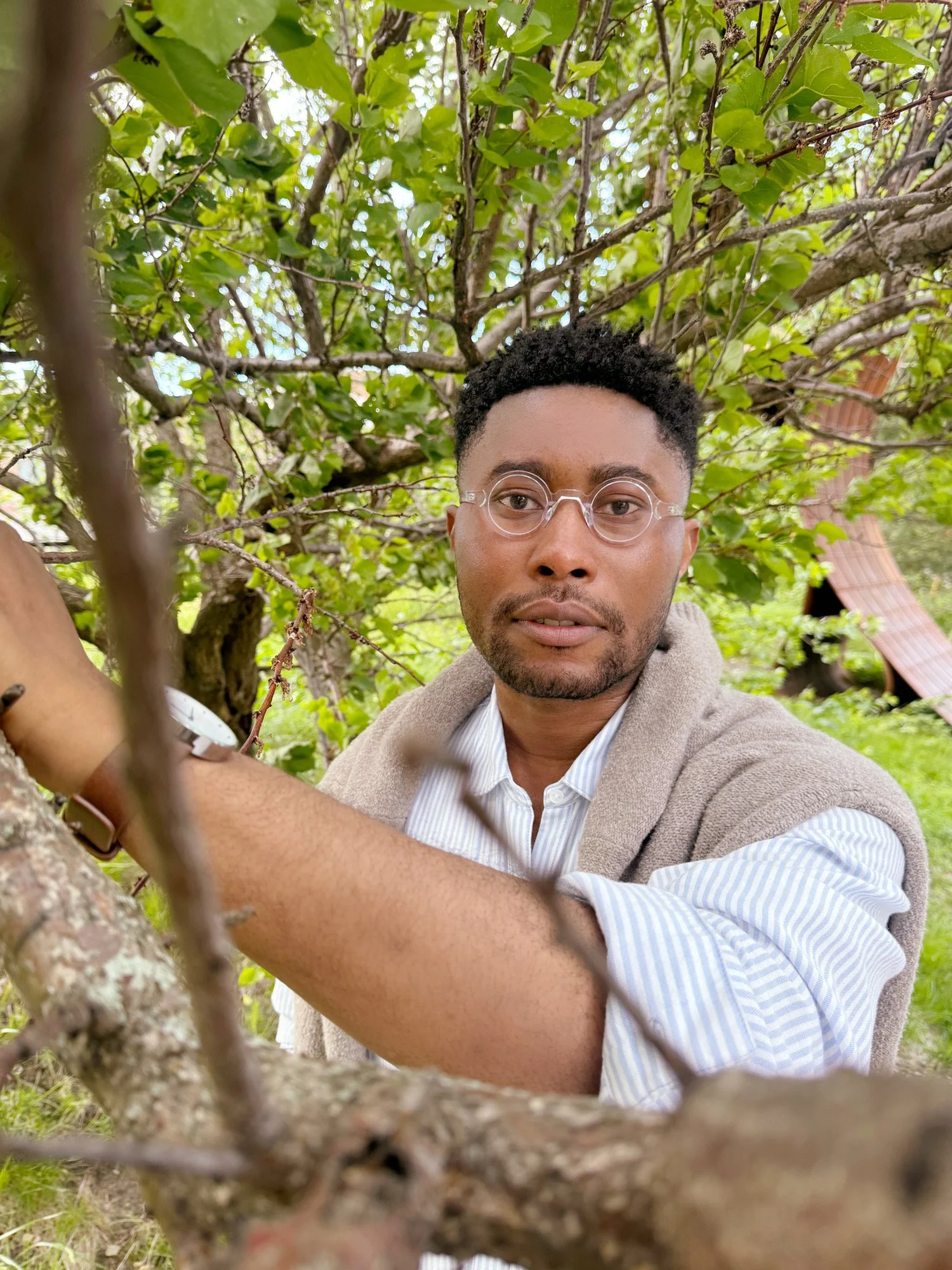
Bhion Achimba (he/them) grew up in rural southeastern Nigeria and is a Wallace Stegner Fellow in Poetry at Stanford University. He holds an MFA in Literary Arts from Brown University and is a recipient of the 2023 Ruth Lilly and Dorothy Sargent Rosenberg Poetry Fellowship. His writing has appeared or is forthcoming in The New York Times, The Paris Review, The Atlantic, Poetry, Harvard Review, Foreign Policy, and Guernica, among other publications. He has received fellowships and support from PEN America, PEN International, Yaddo, the Fine Arts Work Center, and the Oregon Institute for Creative Research. He has taught poetry at Brown and Stanford and was a Scholar at Risk and visiting poet in the English Department at Harvard University.
In response to Bhion Achimbe’s Vigil, 1999, Kristina Marie Darling writes: Throughout this extraordinary collection, Bhion Achimbe considers the sheer limits of language the aftermath of violence, particularly the state-enacted atrocities of the Fourth Republic. Achimbe reveals the powers of documentary poetry to not necessarily to transform or rewrite history, but to reclaim agency over one’s own narrative. “Desire climbed into my head,” he writes, “I want to be something else, I said.” In poems that are at turns quotidian, heartbreaking and transformative, Achimbe establishes himself as a rising star in contemporary poetry. This is a book you won’t soon forget.
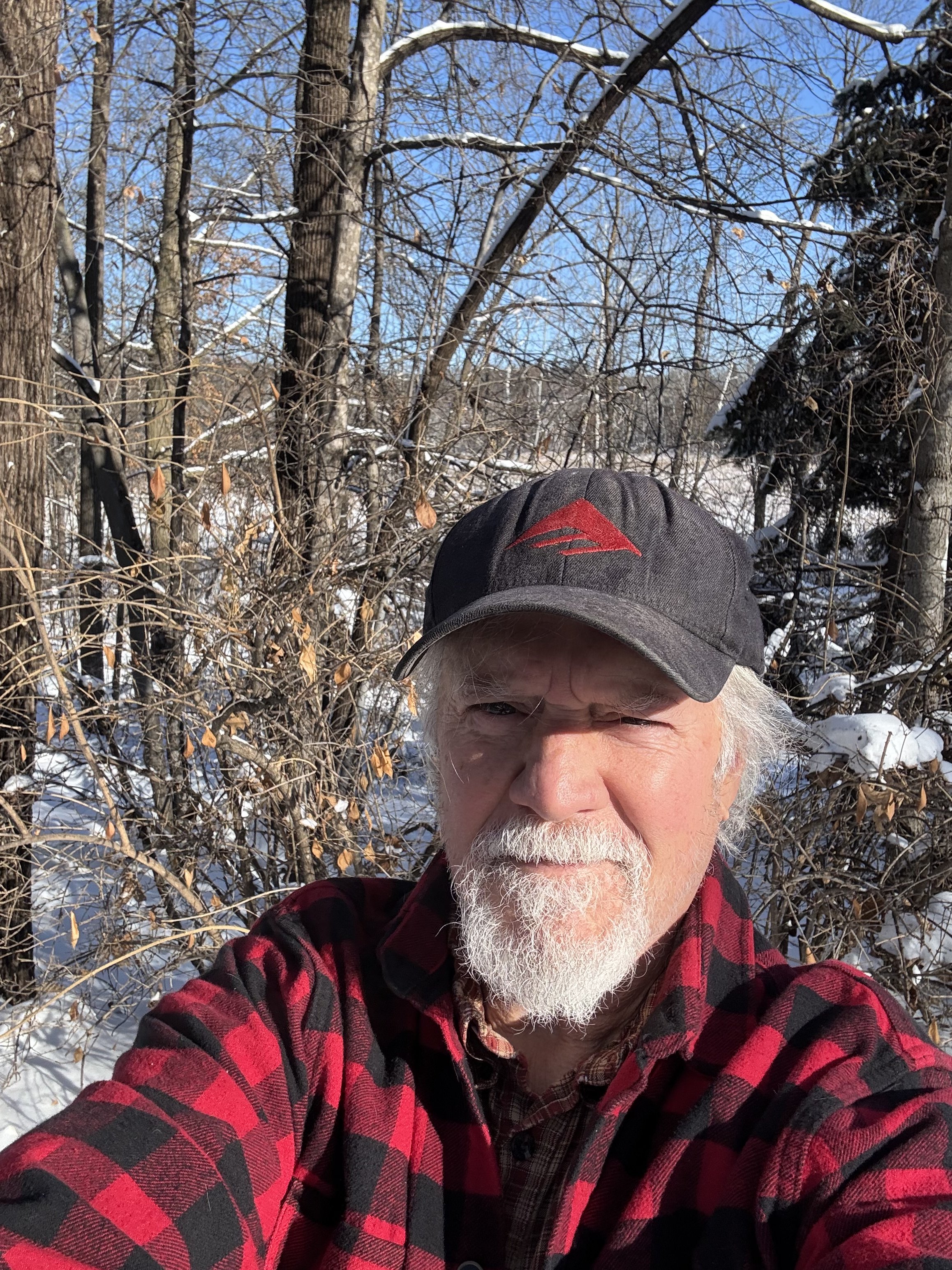
Mark Conway lives in rural Minnesota near a failed ski resort. His books include Any Holy City. short-listed for the PEN/Joyce Osterweil Award, Dreaming Man, Face Down, winner of the American Poetry Journal Book Prize, rivers of the driftless region and the chapbook, First Body, awarded the Aldrich Poetry Prize. Individual poems have appeared in The Paris Review, Slate, Bomb, American Poetry Review, Kenyon Review online, Harvard Review, Grolier Poetry Prize Annual, Boston Review, the PBS NewsHour and elsewhere. Other writing has appeared in Oxford Encyclopedia of American Literature and in several anthologies. His work has received fellowships from the MacDowell Colony, the Corporation of Yaddo, Bread Loaf Writers' Workshop, the Jerome Foundation and the McKnight Foundation Artists’ Fellowship for Writers.
In response to Mark Conway’s Ur, Jeffrey Levine writes: Ur is a book of pilgrimage in the wildest sense: across the North Dakota prairie and the ancient world, through medieval maps and imaginary cities, toward the dead and toward whatever remains of home. Mark Conway has made a marvelously mongrel work—poetry, travelogue, field guide, history, comedy, elegy, spiritual inquiry—in which a thirteenth-century monk’s map to Jerusalem can be laid over the American prairie and suddenly Winnipeg is Rome. At the book’s deepest center is the beloved, lost brother Johnny, whose presence turns wandering into mourning and mourning into a form of travel. Ur is learned without solemnity, funny without evasion, grief-struck without surrendering to grief. It is one of those rare books that seems to invent the form necessary to contain its own unruly intelligence.
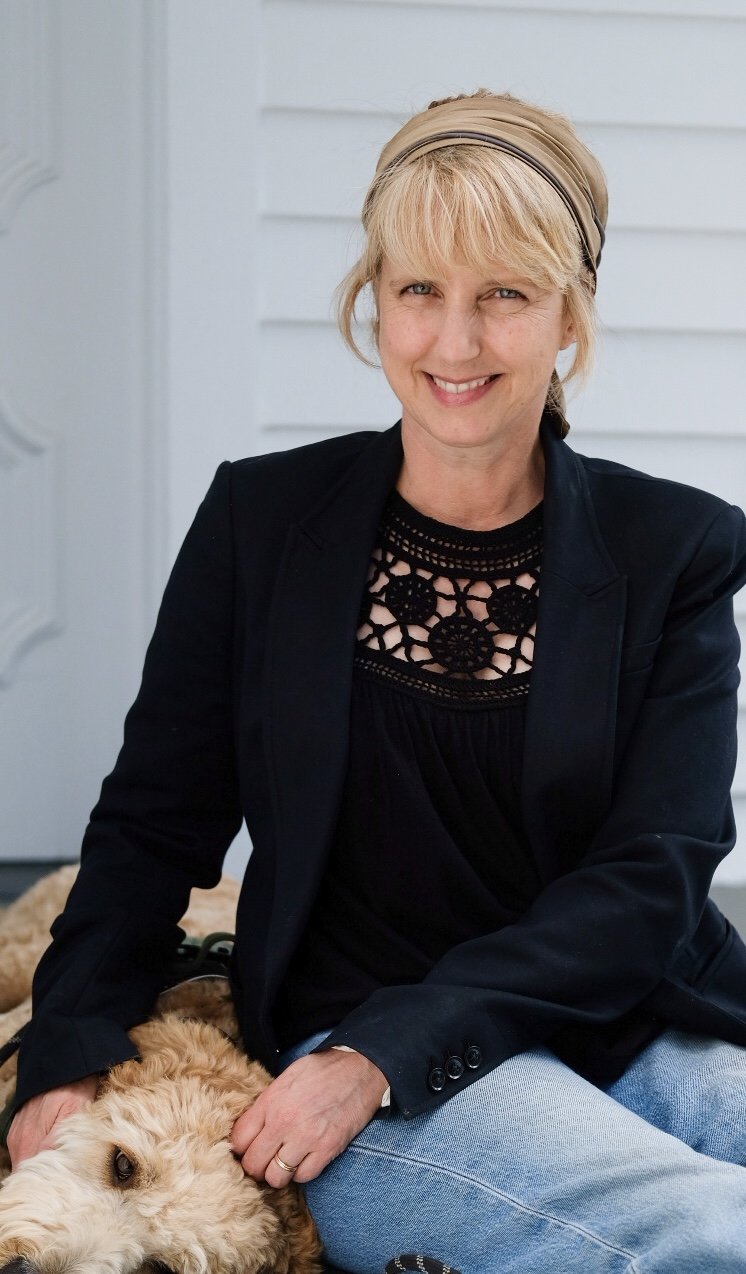
Christine Robbins
Christine Robbins lives and works in Olympia, Washington, and she received an MFA
from the Rainier Writing Workshop. Her poems have been published in Beloit Poetry
Journal, The Georgia Review, New England Review, Poetry Northwest, West Branch,
and other literary journals. Robbins was a finalist for the National Poetry Series and the
winner of Missouri Review’s 2024 Poem of the Year.
In response to Christine Robbins’s The Ghost Bees, Jeffrey Levine writes: Christine Robbins’s The Ghost Bees begins with an astonishing proposition: “The gods / Have not abandoned us / But they / Are very small.” From that proposition comes a book of fierce tenderness, haunted by disappearing language, threatened bodies, mothers and daughters, bees and birds, illness, culpability, and the terrible knowledge that love cannot always keep the beloved alive. Its central grief—the suicide of a daughter—changes the valence of everything around it: myth, memory, disability, the natural world, even the speaker’s own faltering speech. Christine Robbins has written a book that refuses consolation while remaining almost painfully alert to wonder. Drawing upon her remarkable prescience, what has vanished returns over and again as presence: ghost bees, lost words, the dead entering the living world. The result is heart-stopping, strange, and luminously alive.
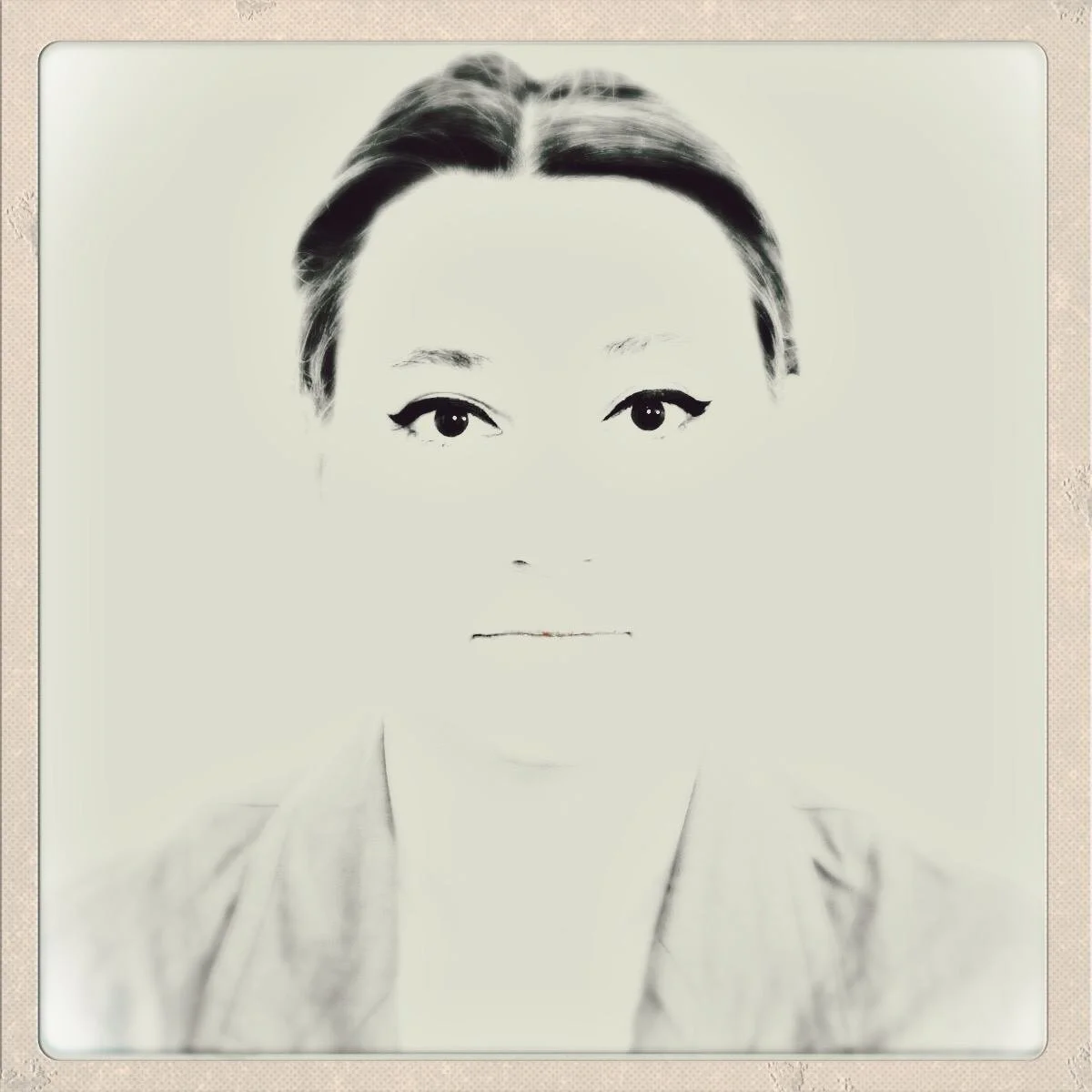
Anca Roncea is a Romanian-American poet and translator, a graduate of the Iowa Writers’ Workshop, University of Iowa’s MFA in Literary Translation and is currently a PhD candidate in Comparative Literature (International Writers’ Track) at Washington University in Saint Louis. Anca’s work has been published in the Berkeley Poetry Review, Beecher’s Magazine, Omniverse, the Bare Life Review, Asymptote, The Offing and Lana Turner, The Dada/Surrealism Journal. Her translation from Romanian of the poetry collection “Tribar” by Andra Rotaru was published in 2022 by Saturnalia. She is also the recipient of a Fulbright grant and a Pen/Heim Translation grant. She is currently working on experimental translations and speculative archives on the work and presence of women artists in the Dada Movement.
In response to Anca Roncea’s Telephony Building, Kristina Marie Darling writes: This singular collection weaves together the lyric with epistemology and history in a way that is all too rare in contemporary poetry. Yes, of course Roncea asks timely questions about the production of knowledge, the ethics of the archive, and the possibilities contained within it—but to limit a reading of her work to just these thematic concerns would be to greatly underestimate her powers as a writer. As Roncea reflects powerfully on the circumstances of her book’s own making, the language is as alive as the ideas engaged therein. With its understated elegance, carefully chosen metaphors, and lush soundscapes, Telephony Building is an achievement of the highest order.
A short message from the Editors:
We would also like to honor other manuscripts of extraordinary merit, but before we do, we wish to acknowledge we are all human, we writers, and so very tender when it comes to announcements like this. We tend (of course) to believe that not getting selected equals "rejection." Not so. We fall in love with so many of the manuscripts we read (both full-length and chapbooks), many of which we would publish if we had the time and money, and we learn so much by reading all of the submissions. This is why it's so important for you, as poets, to keep your work in front of us as well as other publishers you admire.
Please keep in mind that our Helena Whitehill Book Award (Christopher Kempf, final judge) is currently open to submissions until October 31st, 2024 at 11:59 PM ET. Our Dorset Prize (Allison Benis White, final judge) is also currently open to submission through December 31st. We encourage you to let us see your work again.
Here now, a list of other Manuscripts of Extraordinary Merit:
Will Brewbaker, The Advent Lyrics.
Jennifer Gosetti-Ferencei, The Autobiography of Earth.
Eva Hooker, Portion.
Rachel Kaufman, In the Desert Rain.
Erin Keane, The Fig Wasp.
Bela Koschalk, Floor Work.
Ananda Lima, Stereopsis.
Kristi Maxwell, more alphabet [o].
Lauren Myers-Hinkle, Phantom Ride.
Emily Oliver, Circuitry.
Katie Richards, Cubicle.
Lee Roripaugh, Kaze no Denwa / The Wind Phone.
Christopher Salerno, Choose Your Own Adventure.
Frederick Speers, Animus.
Shiyang Su, Xenos, A Study.
Leah Tieger, Toxome Poetica.
Congratulations to all of the poets whose exciting work gave us so many, many hours of pleasurable reading, not only those poets cited above, but all who submitted manuscript to our Summer Open Reading Period. We hope to see your work again!
Respectfully,
The Editors