
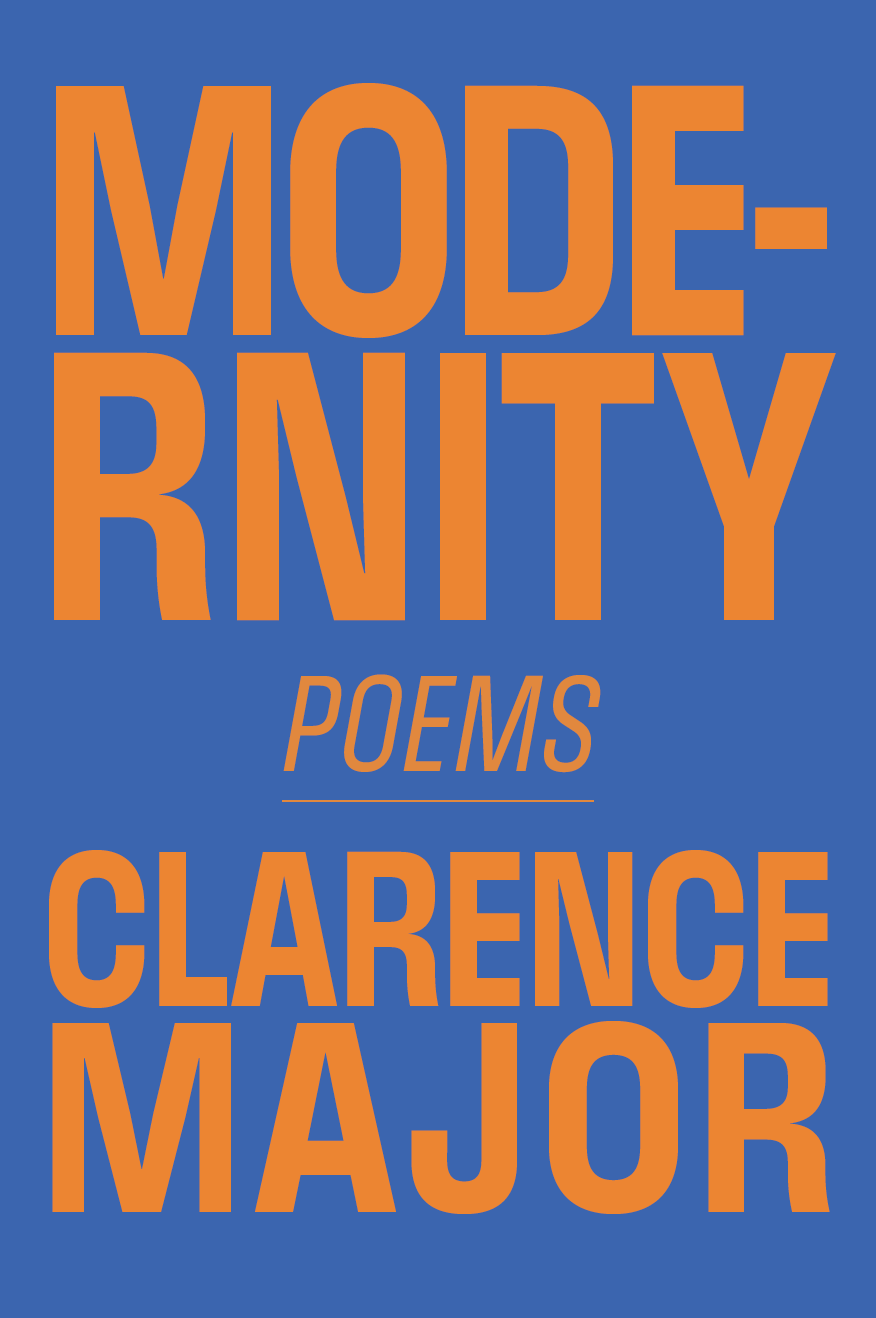
 Image 1 of 1
About the Author
Clarence Major is an acclaimed poet, novelist, painter, essayist, editor, and lexicographer whose work has helped shape contemporary American literature for more than six decades. The author of fifteen collections of poetry—including Configurations: New and Selected Poems, 1958–1998, a National Book Award finalist, and From Now On: New and Selected Poems 1970–2015—he has also published numerous novels, essays, dictionaries of African American language, and influential anthologies. A recipient of the PEN Oakland/Reginald Lockett Lifetime Achievement Award, the Congressional Black Caucus Foundation's Lifetime Achievement Award in the Fine Arts, a Fulbright Fellowship, two Pushcart Prizes, and many other honors, Major is also an accomplished painter whose work has been exhibited nationally. He is Distinguished Professor Emeritus of twentieth-century American literature at the University of California, Davis.
Format: Paperback
Published: April 2027
ISBN: 9781961209893
Advanced Praise
“W.H. Auden boldly asserted that the beauty of any present moment or place must, inevitably, ‘disturb our rights.’ And so it is altogether fitting that the beauty of these poems gathered under the title of Modernity should disturb our rights to the very notion of here and now. With gracious tenderness and tact, Clarence Major details the lineaments of our human hours and the intricate network of memory, anticipation and intractable fact that makes of each hour something nearly sacred. Here is a masterwork of challenge and reassurance.” —Donald Revell, author of Canandaigua
“In this marvelous new collection, Clarence Major is always moving outward, reaching with his compassionate, penetrating gaze to pick out details that reveal the crucial though delicate human truths that animate his subjects. There’s a tremendous generosity to his approach that feels rooted in a love of and respect for the world in all its vibrancy. On every page, we’re aware that we are in the hands of a great poet and a great heart. —Cole Swensen, author of And And And
“The painterly, openhearted poems in Clarence Major’s Modernity reflect a lifetime of paying attention. This is a poet who has been watching, listening, keenly alert to the threats and pleasures of this complicated world, curious and patient as it reveals itself. His touch is light, his language spare, his images sharp. So much love, such generosity of spirit. Barbershop, bar, library, waiting room: he can conjure a scene, create a character, in a few strokes. This poet knows where the dangers are. And the beauties. ‘Be careful,’ he tells us, then, ‘I’ll be waiting there,’ he says.” —Donna Masini, author of Did You Find Everything You Were Looking For?
“What astonishes me about Modernity is its refusal to look away… These poems know that beauty and hardship occupy the same block, the same city, the same nation. But ultimately, consciousness itself is the subject here… The poems are blessed with the powers of vision, which is to say: the eye works overtime here: it watches the whole of human history… How does he do it? Perhaps because the book is suffused with affection for the world—not that the world is easy or just, but that it remains endlessly interesting. The reader understands very quickly that Modernity is the work of someone who has lived long enough to see that wonder is a discipline. In our tragic, mad age, this clarity is no small gift to share with readers. And I, for one, am deeply grateful for this curious, alert, and deeply American work of late wisdom.” —Ilya Kaminsky, author of Dancing in Odessa
“Clarence Major’s Modernity is a book so superb that it will stand alongside William Carlos Williams’ Pictures from Brueghel and Robert Hayden’s A Ballad of Remembrance. Its greatness derives from everyday observation, which Major renders with high-res vivacity. At once unsentimental and brimming with heart, poems such as ‘Happiness,’ ‘Getting It,’ ‘Barbershop,’ and ‘The Rainbow’ will be with us as long as we have poems. ‘Hope struggles along,’ Clarence Major writes, and with Modernity he proves the struggle beautiful and true.” —Peter Campion, author of One Summer Evening at the Falls