
 Image 1 of 1
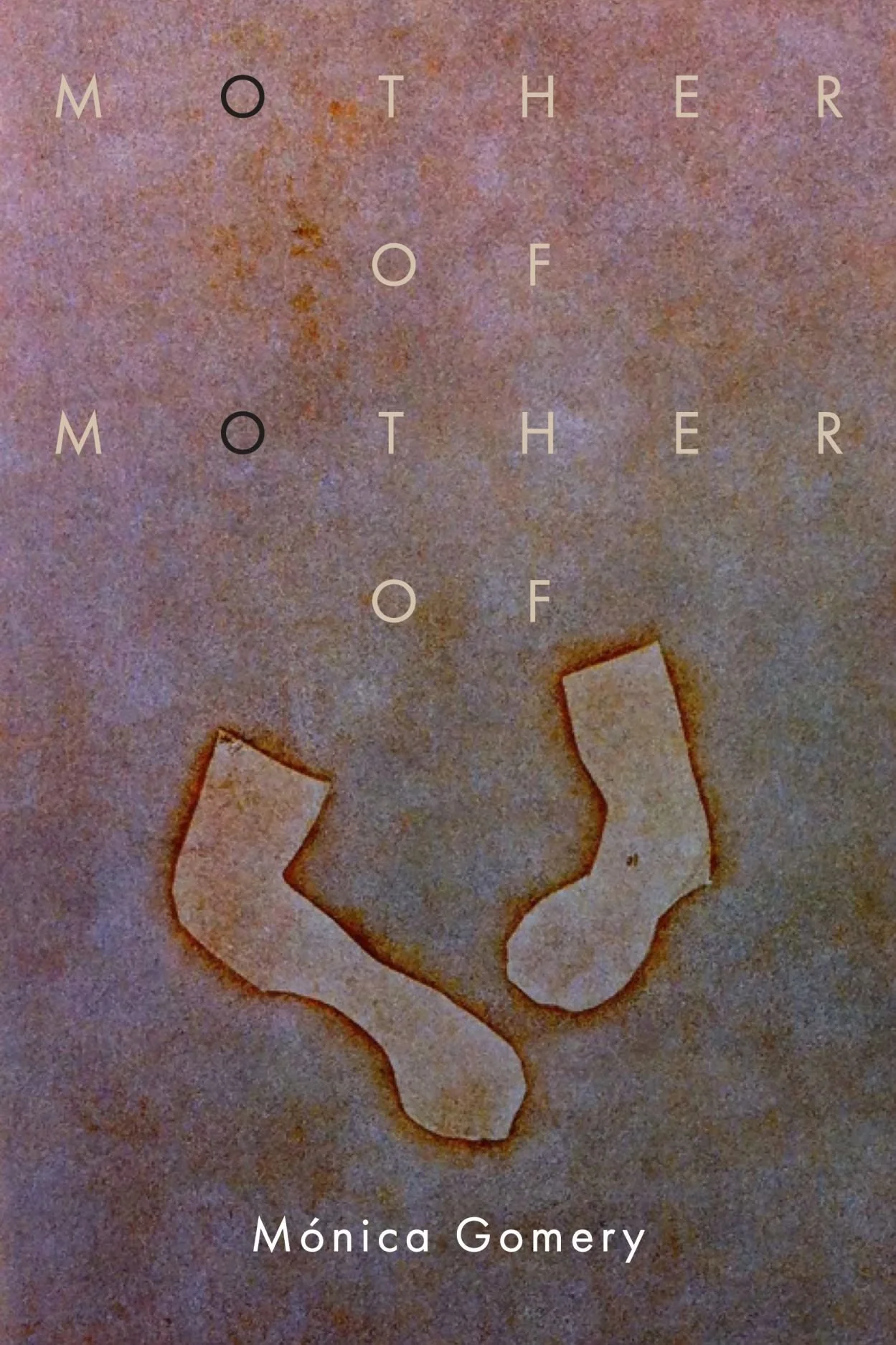
Winner of the Helena Whitehill Book Award

About the Author
Mónica Gomery is the author of two previous books of poetry, Might Kindred, winner of the Prairie Schooner Raz-Shumaker Book Prize (University of Nebraska Press, 2022), and Here is the Night and the Night on the Road (Cooper Dillon Books, 2018), as well as the chapbook Of Darkness and Tumbling (YesYes Books, 2017). Her poems have been awarded the Stanley Kunitz Memorial Prize and the Sappho Prize for Women Poets. She has received residencies and support from the Vermont Studio Center, the McCormark Writing Center (previously the Tin House Writers’ Workshop), and Sundress Academy for the Arts, and has been featured on The Slowdown podcast. She has published widely in journals including Kenyon Review, Poetry Northwest, Massachusetts Review and American Poetry Review. A queer, first generation Venezuelan-American writer and rabbi, Mónica serves on the clergy team of Kol Tzedek Synagogue, a vibrant and justice-oriented community in Philadelphia, where she lives with her partner, dog, and an ever-growing collection of houseplants and books.
Format: Paperback
Published: March 2027
ISBN: 9781961209824
Advanced Praise
“‘Way too late / for elegies about the earth,’ this poet tells us, ‘too late for compost, eco-poem’—our world is on fire. And yet, in this book, on page, the character still makes sure to ‘bring all the plants into the bathroom. Turns each / measuring cup’s silver ear into the brown world beneath it, the water listening for where it needs to spread.’ One of the ancient functions of poetry is to heal and repair the world, despite all the devastation—and this need for repair of our moment is everywhere in these poems’ imagery and tone. Despite all the tragedy we see around us, the poems speak of ‘a friend / [who] cooks Condolence Lasagna. / A neighbor neighbors / her elder. Each day, the world asks / to be born’ This is a book to live with.” — Ilya Kaminsky, author of Deaf Republic
“Gomery’s poetry is a full-blown practice of praise: her voice is always in relation to others, in community, and in love. In Mother Of Mother Of she sharpens my faith. The poet treats her own body as the instrument of difficult hope, combining feminist Jewish tradition and the hard work of loving truly and queerly in a dying world. In these lyrics one finds an unceasing capacity for song, but it is married to the rabbinic mode: wrestling with questions in the never-ending search for truth. With ‘faith fireworking / through me,’ the poet carries each poem toward rapture and unknowing. Gomery holds it all in her hands: the simultaneous desires for a life with and without children; the clear-eyed contentions with power, violence, and erasure as also parts of Jewish inheritance; the aching tenderness and the dogged turning of the voice, over and over again, toward joy. These poems are heartwork—anthemic, substantial, rigorous, continually in touch with loving. ‘Every year I fight a little harder. / Every year the singing wins the war.’” — Jay Deshpande, author of Love the Stranger
“Gomery is a writer obsessed with creation, and in her newest collection Mother of Mother of, she skillfully plumbs the many incarnations of birth and nurture and mutual care. Not least of these is her description of a kind of holy place—a ‘golden lung / unburdened by disaster’—that these poems manifest through their insistent belief in the ‘liquid / goodness at the center of the world.’ If, as Gomery posits, ‘[m]etaphor is a poetics of interconnection,’ then we as readers are beholden to these words that multiply across the page, that bind us together with their fervent, fluent call. ‘Could it be as wild as trusting / other people?’ Reading these poems makes me believe that we can.” — Keetje Kuipers, Editor, Poetry Northwest
“In Mother of Mother of, Gomery has created a wondrous new season: a simultaneity of fecundity, death, longing, and belonging. From astute intertextual lyrics to a sparkling crown of sonnets, the poems in this collection enact the potential of the poet to queer and query, to meditate and memorialize, to transgress and transcend. I marvel and am made still.” — Ama Codjoe, author of Bluest Nude